
Introduction: A Quiet Hazard—Have We Done Enough?
Have you ever paused mid-run and asked yourself if the thin cloud above your table is just smoke or the start of a health problem? I have seen that moment many times in small shops and community labs—where a machine hums and nobody stops the job. A laser cutter fume extractor must be more than an afterthought; the extractor decides whether fumes, VOCs and PM2.5 become a nuisance or a hazard.
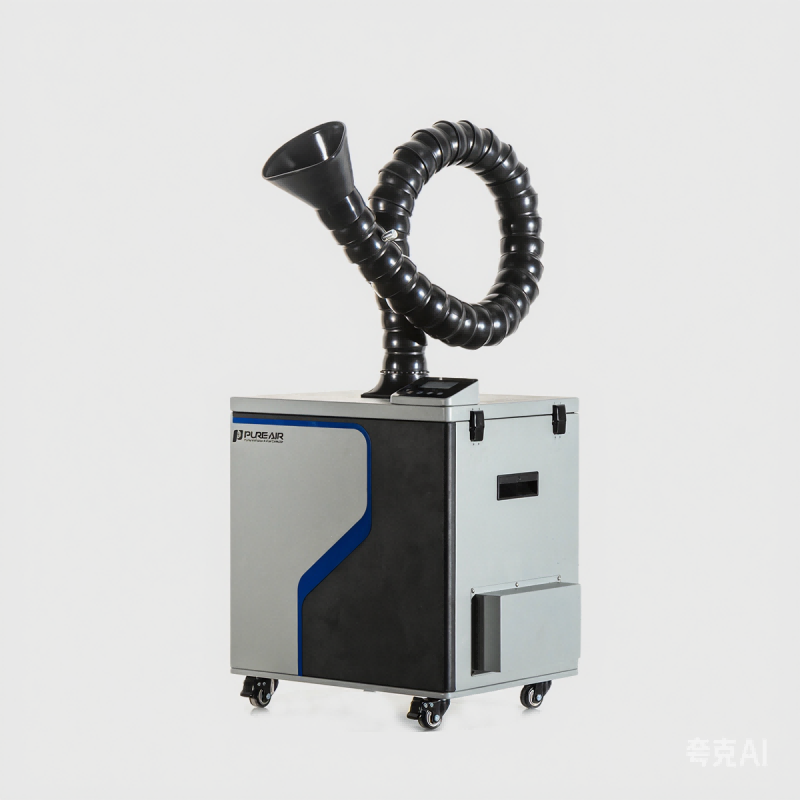
Consider this scenario: a hobbyist shop cutting 5 mm acrylic for signage produces volatile organic compounds and fine particulates; short runs can push local PM2.5 well above safe thresholds (data from indoor air studies show spikes of dozens of µg/m3 in minutes). In other words: the risk is real and fast. So what do we do when budget, noise, and space fight with compliance and safety? (I’ll be frank — I find that many operators underestimate the exposure.)
In this article I will compare concrete metrics that matter: capture efficiency, filter chemistry, and airflow performance. I write as someone who has guided makers and factories through painful upgrades; you will get direct, usable perspective rather than marketing gloss. Next, I’ll dig into why common solutions fall short and what hidden user pains go unnoticed—so we can see where meaningful improvements lie.
Part 2 — Why Most Systems Miss the Mark
fume extraction system for laser cutting often sounds like a solved problem on paper, but when I inspect real installations I see repeated failures: undersized fans, single-stage filters that do nothing for VOCs, and capture hoods placed too far from the cut zone. Those are not minor details. In technical terms, insufficient CFM and poor capture velocity lead to fugitive emissions; filtration that lacks activated carbon fails to adsorb VOCs; and reliance on coarse pre-filters means HEPA stages clog faster. Look, it’s simpler than you think — a good system balances capture efficiency, filtration stages, and maintenance workload.
Why do common extractors fail?
First, installers buy by price instead of matched performance. They pick a unit rated for a room size rather than for the nozzle-level capture velocity needed to stop smoke at the source. Second, users ignore filter chemistry: many filters remove particulates but not ozone or certain VOCs generated by cutting PVC or coated metals. Third, operational pain points—noise, filter cost, and downtime—push shops to bypass extraction or run it at low speed. I’ve watched this turn into routine exposure. Industry terms here: CFM, HEPA, activated carbon, VOCs. These are not abstract; they dictate whether fumes are controlled or simply dispersed into the workspace. If you want a practical fix, start by matching your capture hood geometry to the laser head and choose a multi-stage filter with carbon adsorption and a reliable fan drive (VFDs help control noise and efficiency). Maintenance planning—filter replacement intervals and clear service paths—solves half the complaints before they start.
Part 3 — What’s Next: Principles for Better Systems
Now, looking forward, I prefer to explain by principle rather than by brand. New systems marry airflow engineering with smarter sensing. For example, sensor fusion (particle + VOC sensors) can trigger variable fan speeds so the unit runs quietly during idle times but reacts quickly during intense cuts. Pair that with modular filtration—pre-filter, HEPA/ULPA, and tailored activated carbon beds—and you get both capture and chemistry control. A modern fume extraction system for laser cutting should include easy-access filter modules, clear diagnostic LEDs, and a VFD or variable-speed blower to balance power use and noise. I am excited by these principles because they solve real user pains: lower running cost, less noise, and less downtime.
What’s Next?
Here are three practical evaluation metrics I recommend when choosing a system (advisory style — because choices matter):
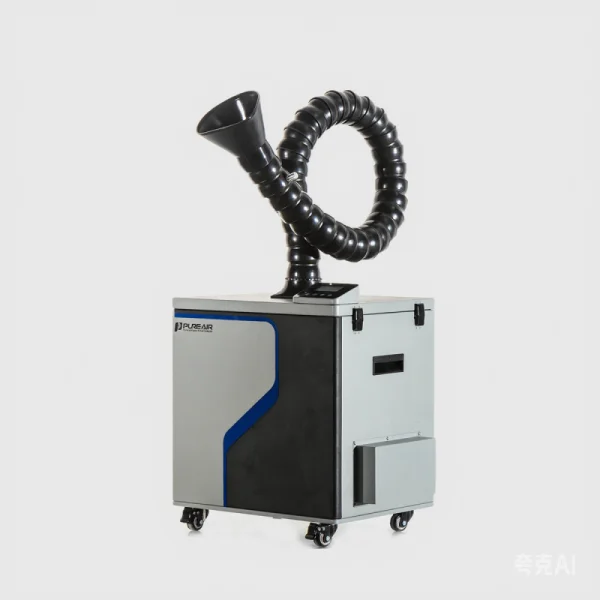
1) Capture Efficiency at Source: Measure or verify hood geometry and capture velocity at the nozzle. If the extractor can’t catch smoke within a few centimeters, it fails—period.
2) Filtration Completeness: Look for multi-stage filtration that lists particulate removal (HEPA/ULPA) and VOC adsorption capacity (type and amount of activated carbon or chemisorbers). Check replacement intervals and costs.
3) Operational Footprint: Assess noise (dBA), energy draw (kW or via VFD), and service access. A quiet, efficient system is far more likely to be used correctly every day — funny how that works, right?
I speak from hands-on experience: these metrics reduce surprises and make upgrades predictable. In closing, weigh technical fit and the human factors equally — because a system sits in a workshop, not a lab report. For practical solutions and tested units, I often point professionals toward suppliers who balance engineering with service. If you want a starting reference, consider exploring PURE-AIR for models and specs: PURE-AIR.